

History Of Hajj
Prophet Ibraheem’s (AS) Legacy
Hajj embodies the core principle of Islam: belief in one God. Each ritual performed and every site visited during Hajj serves as a reminder of the profound history behind this faith, known as Tawheed (Islamic Monotheism).
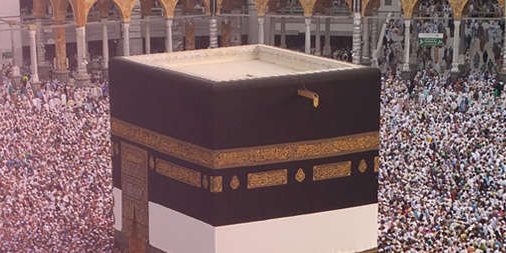
Central to the history of Tawheed is the account of Prophet Ibraheem (AS), who reconstructed the Ka’bah, the first House of Allah (SWT), establishing it as the central place for worshipping Allah alone.
Prophet Ibraheem’s (AS) journey is marked by remarkable sacrifices and unwavering devotion to Allah (SWT).
His perseverance through numerous trials for Allah’s sake led to his elevation as a leader among humanity.
Allah (SWT) says: “And (remember) when the Lord of Abraham (Allah) tried him with (certain) Commands, which he fulfilled.
He (Allah) said (to him), “Verily, I am going to make you a leader (Prophet) of Humanity.”
(Abraham) said, “And of my offspring (to make leaders).”
(The Almighty Allah ) said, “My Covenant (Prophethood) includes not Zalimun (polytheists and wrong-doers).” (Al-Baqarah 2:124 )
When Ibraheem (AS) began inviting others to Allah (SWT), he faced many hardships: he was exiled from his home, abandoned by loved ones, thrown into a fire, and driven out by the king.
Ibraheem (AS) remained steadfast through every trial, holding firm in his commitment to truth. Even while in exile, he traveled throughout the known world at that time, inviting others to follow the path of Allah (SWT).
Later in life, after losing hope of having children, he was blessed with a son. Allah (SWT) then tested Ibraheem (AS) by commanding him to sacrifice this beloved son.
Demonstrating absolute obedience, Ibraheem (AS) took Isma’eel (AS) to Mount Marwah near the Ka’bah, laying him face down in preparation for the sacrifice.
Seeing Ibraheem’s (AS) unwavering submission and deep devotion, Allah (SWT) replaced Isma’eel (AS) with an animal for the sacrifice.
Muslims commemorate this event by performing animal sacrifices during Hajj and on Eid al-Adha across the world.
Leadership was assigned to Ibraheem (AS), who played a foundational role in the development of the universal Islamic movement.
To advance this initiative, Ibraheem (AS) required individuals to establish themselves in various regions and serve as his representatives. Accordingly, he designated his elder son Isma’eel (AS), his younger son Ishaq (Isaac (AS)), and his nephew Lut (Lot (AS)) to different areas within the known world at that time. Isma’eel (AS) remained in Arabia at Makkah, where Ibraheem (AS) spent significant time alongside him to promote the principles of Islamic monotheism throughout Arabia.
They said: “Burn him and help your Aliha (gods), if you will be doing. We (Allah) said: “O fire! Be your coolness and safety for Ibrahim (Abraham)!” (Al-Anabiya 21:68,69)
Allah (SWT) says: “They said: “Build for him a building (it is said that the building was like a furnace) and throw him into the blazing fire! So, they plotted a plot against him, but We made them the lowest.
And he said (after his rescue from the fire): “Verily, I am going to my Lord. He will guide me!”
‘My Lord! Grant me (offspring) from the righteous.’
So, We gave him the glad tidings of a forbearing boy.
And, when he (his son) was old enough to walk with him, he said: “O my son! I have seen in a dream that I am slaughtering you (offer you in sacrifice to Allah), so look what you think!” He said: “O my father! Do that which you are commanded, Insha-Allah (if Allah wills), you shall find me of the patient.
Then, when they had both submitted themselves (to the Will of Allah), and he had laid him prostrate on his forehead (or on the side of his forehead for slaughtering);
And We called out to him: ‘O Abraham! You have fulfilled the dream (vision)!’ Verily! Thus do We reward the Muhsinun (good doers, who perform good deeds totally for Allah’s sake only, without any shoe off or to gain praise or fame, etc. and do them in accordance to Allah’s Orders).
Verily, that indeed was a manifest trial –
And We ransomed him with a great sacrifice (i.e. a ram);
And We left for him (a goodly remembrance) among the later generations (to come) in later times.
‘Salamun (peace) be upon Ibrahim (Abraham)!’” (As-Saffat 37:97-109)
Construction of the Ka’bah
At this location, both father and son collaborated in building the central site of Tawheed, now universally recognized as the Ka’bah. The site was divinely chosen by Allah (SWT), who indicated its precise location.
The process of its construction, the intentions and prayers accompanying the raising of its walls, as well as the initiation of Hajj, are thoroughly described in the Holy Qur’an. Allah (SWT) states:
- “And (remember) when Abraham and (his son) Ishmael were raising the foundations of the House (the Ka’bah at Makkah), (saying), ‘Our Lord! Accept (this service) from us. Verily! You are the All-Hearer, the All-Knower.’
- ‘Our Lord! And make us submissive unto You and show us of our offspring a nation submissive unto You, and show us our Manasik (all the ceremonies of pilgrimage – Hajj and ‘Umrah, etc.), and accept our repentance. Truly, You are the One Who accepts repentance, the Most Merciful.’
- ‘Our Lord ! Send amongst them a Messenger of their own [and indeed Allah answered their invocation by sending Muhammad (SAW)], who shall recite unto them Your Verses and instruct them in the Book (this Qur’ân) and Al-Hikmah (full knowledge of the Islamic laws and jurisprudence or wisdom or Prophethood, etc.), and purify them. Verily! You are the All-Mighty, the All-Wise.’” (Al-Baqarah 2:127-129)
Allah (SWT) also says:
- “Verily, the first House (of worship) appointed for Humans was that at Bakkah (Makkah), full of blessing, and a guidance for Al-‘Alamin (Humans and Jinns).
- In it are manifest signs (for example), the Maqam (place) of Abraham; whosoever enters it, he attains security. And Hajj (pilgrimage to Makkah) to the House (Ka’bah) is a duty that Humanity owes to Allah, those who can afford the expenses (for one’s conveyance, provision and residence); and whoever disbelieves [i.e. denies Hajj (pilgrimage to Makkah), then he is a disbeliever of Allah], then Allah stands not in need of any of the ‘Alamîn (Humans and Jinns).” (Al-‘Imran 3:96-97)
The Allah (SWT) says:
- “And (remember) when Abraham said: ‘O my Lord! Make this city (Makkah) one of peace and security, and keep me and my sons away from worshipping idols.’
- ‘O my Lord! They have indeed led astray many among humans. But whoso follows me, he verily is of me. And whoso disobeys me, – still You are indeed Oft-Forgiving, Most Merciful.’
- ‘O our Lord! I have made some of my offspring to dwell in a land with no cultivation, by Your Sacred House (the Ka’bah at Makkah); in order, O our Lord, that they may offer prayers perfectly (Iqamat-as-Salat), so fill some hearts among men with love towards them, and (O Allah) provide them with fruits so that they may give thanks.’” (Ibrahim 14:35-37)
And Allah (SWT) says:
- “And (remember) when We showed Abraham the site of the (Sacred) House (the Ka’bah at Makkah) (saying): “Associate not anything (in worship) with Me, [La ilaha ill-Allah (none has the right to be worshipped but Allah) – Islamic Monotheism], and sanctify My House for those who circumambulate it, and those who stand up for prayer, and those who bow (submit themselves with humility and obedience to Allah), and make prostration (in prayer, etc.);”
- And proclaim to Humans the Hajj (pilgrimage). They will come to you on foot and on every lean camel, they will come from every deep and distant (wide) mountain highway (to perform Hajj).” (Al-Hajj 22:26-27)
This House “Ka’bah” was established not solely as a place of worship; from its inception, it has served as the center for the universal Islamic mission. Its intended function is to bring together believers in Allah (SWT) from across the globe each year, enabling them to engage in Ibadat (worship) collectively and return to their respective countries with the message of Islam.
Fulfillment of Ibraheem’s (AS) Prayer
Throughout history, the descendants of Ibraheem (AS) and Isma’eel (AS) deviated from the principles of Tawheed, gradually embracing practices prevalent among other uninformed societies.
The Ka’bah, originally established as a centre for promoting monotheism, became filled with numerous idols, including those representing Ibraheem (AS) and Isma’eel (AS), whose own lives were dedicated to eradicating idol worship.
Eventually, the prayer that Ibraheem (AS) and Isma’eel (AS) had offered during the construction of the Ka’bah was granted.
- “’Our Lord! Send amongst them a Messenger of their own [and indeed Allah answered their invocation by sending Muhammad (SAW)], who shall recite unto them Your Verses and instruct them in the Book (this Qur’an) and Al-Hikmah (full knowledge of the Islamic laws and jurisprudence or wisdom or Prophethood, etc.) and purify them. Verily! You are the All-Mighty, the All-Wise.’” (Al-Baqarah 2:129)
Muhammad ibn Abdullah (SAW), a remarkable man descended from Ibraheem (AS), restored the true faith of Islamic monotheism.
He cleansed the Ka’bah of idols and re established Tawheed in its original form. Prophet Muhammad (SAW) put an end to the disgraceful and harsh practices of the Jahiliya period that were common among Arabs such as idol worship, smearing sacrificial blood and meat on the walls of the Ka’bah, immoral acts, indecency, disputes, and circumambulating the Ka’bah while naked, along with other negative traditions.